![🏆 Top 7 Best Roof Waterproofing Specialists in Singapore 🏆 [2026]](/_next/image?url=%2Fcontent%2Ftop-best-roof-waterproofing-specialists-in-singapore%2F5-best-roof-waterproofing-specialists-in-singapore-1.webp&w=3840&q=75&dpl=dpl_3artMmXpxWYMW6QqV1kswMfJXmWz)
Finding the best roof waterproofing specialist in Singapore? Your roof is one of the most important parts of your home, so it's important to keep it in good condition. Waterproofing is essential to protecting your roof from the elements and preventing leaks. If you need your roof waterproofed, it's important to hire a reputable and experienced specialist.
Singapore's tropical climate — with annual rainfall averaging over 2,300mm and near-constant humidity above 80% — makes roof waterproofing not a luxury but a necessity. Without a properly applied waterproofing system, water infiltrates concrete slabs, corrodes rebar, encourages mould growth, and causes ceiling damage that can cost many times more to repair than proactive waterproofing would have. Whether you own an HDB flat, a condominium unit, or a landed property, understanding your waterproofing options and knowing how to choose the right contractor will save you significant money and stress.
Types of Waterproofing Methods
Before engaging a contractor, it helps to understand the different waterproofing systems available in Singapore. Each method suits different substrates, budgets, and performance requirements.
1. Liquid Membrane Waterproofing
Liquid membrane waterproofing involves applying a polymer-based liquid coating — typically polyurethane (PU) or acrylic — directly onto the roof surface. The liquid conforms to any shape, filling hairline cracks and creating a seamless, flexible barrier once cured.
Best use cases: Flat roofs, roof terraces, balconies, and exposed decks where a seamless finish is critical.
Lifespan: 8–12 years with proper maintenance. UV-resistant formulations last longer.
Approximate cost: $18–$35 per sqm, depending on the number of coats and the specific product used. A standard 100 sqm HDB flat roof would typically cost $1,800–$3,500.
Why choose it: Fast application, no joints or seams to fail, and relatively affordable. Works well as a re-coating solution over existing membranes in good condition.
2. Cementitious Waterproofing
Cementitious waterproofing uses a cement-based compound mixed with waterproofing additives and applied like render or plaster. It bonds chemically with the concrete substrate, making it particularly effective where the membrane must tolerate constant water contact.
Best use cases: Wet areas such as bathrooms, toilets, water tanks, swimming pool surrounds, and below-grade walls.
Lifespan: 10–15 years when applied correctly over a sound concrete substrate.
Approximate cost: $12–$25 per sqm. Cementitious products are among the more affordable options, making them popular for bathroom waterproofing during renovation works.
Why choose it: Highly breathable (allows moisture vapour to escape from the slab), easy to apply, and compatible with tile adhesives so floor tiles can be laid directly on top. Not suitable for surfaces subject to structural movement or vibration.
3. Bituminous Waterproofing
Bituminous (or asphalt-based) waterproofing is applied as a cold-applied coating or as a torch-on sheet membrane. The material is hydrophobic and highly resistant to water penetration under sustained head pressure, making it suitable for demanding applications.
Best use cases: Pitched roofs, below-grade structures, retaining walls, and areas subject to prolonged water exposure.
Lifespan: 10–15 years for cold-applied bituminous coatings; 15–20 years for torch-on bituminous sheet membranes.
Approximate cost: $20–$45 per sqm for cold-applied systems; torch-on versions are slightly more expensive due to the labour and equipment involved.
Why choose it: Excellent track record in Singapore's climate, widely available, and compatible with most substrates. Cold-applied bituminous coatings are easier to repair than sheet membranes.
4. Torch-On Membrane Waterproofing
Torch-on (or torch-applied) waterproofing involves heating a pre-manufactured bituminous sheet with an open-flame torch to bond it to the substrate. The heat activates the polymer-modified bitumen, creating a fully adhered, monolithic membrane with no seams through which water can travel.
Best use cases: Flat roofs on commercial buildings, car park decks, and any application requiring maximum durability.
Lifespan: 15–20 years — the longest of any common waterproofing system used in Singapore.
Approximate cost: $30–$60 per sqm, reflecting the premium materials and the specialised skills and equipment required.
Why choose it: If budget allows and you want the most durable solution, torch-on membranes are the industry benchmark for flat-roof waterproofing. They are less susceptible to UV degradation than liquid membranes and can tolerate foot traffic once a protective screed is laid over them. Only engage contractors with specific experience in torch-on application — incorrect torch technique can damage the membrane or create fire hazards.
5. Crystalline Waterproofing
Crystalline waterproofing uses a proprietary blend of cement, quartz sand, and active chemicals that, when applied to concrete, react with moisture and unhydrated cement particles to grow insoluble crystals inside the concrete matrix. These crystals block capillary pores and micro-cracks, effectively turning the concrete itself into the waterproofing barrier.
Best use cases: Concrete water tanks, lift pits, basements, tunnels, and any structure where the waterproofing must function even if the surface layer is damaged.
Lifespan: Effectively permanent — the crystals continue to grow and self-heal minor cracks as long as moisture is present, unlike surface-applied membranes that can delaminate.
Approximate cost: $25–$50 per sqm. The premium is justified by the self-healing capability and the fact that no surface protection coat is needed.
Why choose it: Crystalline systems are increasingly specified for Singapore's new build and restoration projects because they do not require ongoing maintenance or re-coating. They are also the most environmentally stable option since there is no membrane to eventually peel, blister, or crack under thermal cycling.
Finding the Best Roof Waterproofing Specialists in Singapore
Here are the five best roof waterproofing specialists in Singapore, based on quality, customer service, and affordability:
1. J&K ROOF CONTRACTORS – Best Roof Waterproofing Specialist
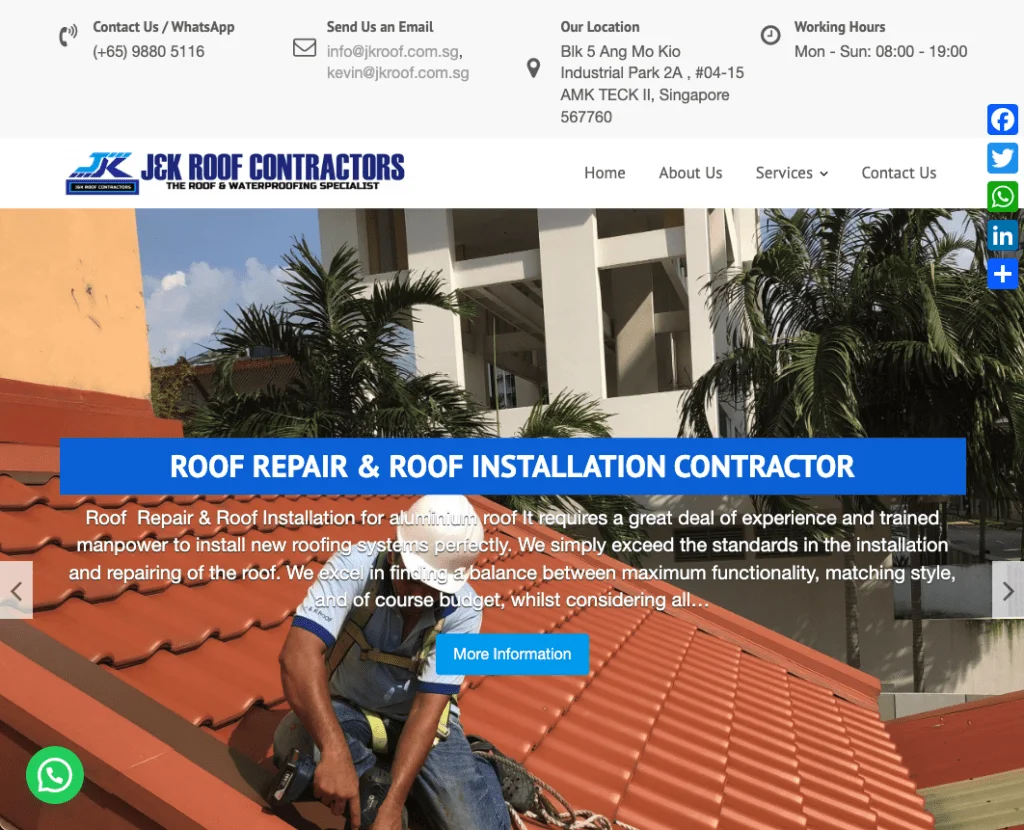
J&K ROOF CONTRACTORS is a leading provider of roof waterproofing services in Singapore. They have over 10 years of experience in the industry and offer a wide range of services.
Services:
- Roof inspection and assessment
- Roof repair and maintenance
- Roof waterproofing
- Roof coating and painting
- Roof moss and algae removal
- Roof replacement
**Website: **https://www.jkroof.com.sg/
Address: #04-15 Ang Mo Kio Industrial Park 2A, Block 5, Singapore 567760****Contact: +6598805116Email:** info@jkroof.com.sg,kevin@jkroof.com.sg
Customer Reviews
Here is what their customer has to say about their services:"Having read all the good reviews about J & K Roofing, I decided to engage their services for roof repair and waterproofing works for my house. It was a decision well made. After 11 days, the project was completed smoothly and safely. Thanks to Kevin and his men for a job well done!" ** – G Tay**J&K ROOF CONTRACTORS uses the latest technologies and materials to ensure that your roof is waterproofed to the highest standards. They also offer a free consultation and warranty on all their work.
2. THE ROOFING SPECIALIST PTE LTD – Roofing, Roof Leakage & Waterproofing Singapore
THE ROOFING SPECIALIST PTE LTD is another reputable roof waterproofing specialist in Singapore.Services:- Roof inspection and assessment
- Roof repair and maintenance
- Roof waterproofing
- Roof coating and painting
- Roof moss and algae removal
- Roof replacement
Website: https://theroofspecialist.com.sg/
Address: 33D, Lowland Road, Singapore 547432
Contact: +6563465493
Email Address: enquiry@theroofspecialist.com.sg
Customer Reviews
Here is what their customer has to say about their services:"We've had recurring roof and wall leaks & falling tiles which other contractors did not seem to be able to fully fix. Marc recommended remedial works and not a new roof (which others suggested and would have cost a lot more). The team were professional, on time, respectful and the quality of work is excellent. Marc sent us progress photos every day and was super responsive when we had questions or additional asks. We replaced a car porch roof and took the opportunity to repaint the house as well as the roof while the scaffolding was up and it looks amazing. The team took a lot of care in cleaning, sanding and filling before painting I have super high standards and they met all of them. We had a big rainfall this weekend and we stayed beautifully dry." – Stephen DayTHE ROOFING SPECIALIST PTE LTD uses high-quality materials and workmanship to ensure that your roof is waterproofed to the highest standards. They also offer a comprehensive warranty on all their work.
3. SINHAO E&C PTE LTD – MCST & Residential Roof Specialists
Sinhao E&C Pte Ltd specializes in roof waterproofing, repairs, and construction services for both condos and landed homes. They follow Singapore BCA standards to ensure high-quality workmanship.Services:- Roof inspection and assessment
- Roof repair and maintenance
- Roof waterproofing
- Roof coating and painting
- Roof moss and algae removal
- Roof replacement
Website: https://sinhaocontractor.sg/
Address: 1 Bukit Batok Crescent, #04-51 WCEGA Plaza, Singapore 658064
Contact: +65 8176 0788
Email Address: enquire@sinhao.net
Customer Reviews
Here is what their customer has to say about their services:"Very detailed oriented professionals. Always answering to my enquiry. And provide a cost efficent design solution~ highly reccomended if you need your construction work done timely and properly. Roofing works, structural works 👍🏼👍🏼" – Mr Liang
4. THE ROOFING MAN – Roof Waterproofing & Repair Specialists
The Roofing Man provides expert roof waterproofing services across Singapore, focusing on both residential and commercial properties.Services:- Roof inspection and assessment
- Roof repair and maintenance
- Roof waterproofing
- Roof coating and painting
- Roof moss and algae removal
- Roof replacement
Website: https://theroofingman.sg/
Address: 400 Balestier Rd, #01-45 Ballestier Plaza, Singapore 329802
Contact: +65 8356 0050
Email Address: theroofingman0050@yahoo.com
Customer Reviews
Here is what their customer has to say about their services:"I had an excellent experience with The Roofing Man. From the first consultation, their team was professional, knowledgeable, and transparent about the entire process. They quickly identified the source of my roof leak and explained the repair options clearly, without any pushy sales tactics.The work itself was top-notch. They arrived on time, worked efficiently, and left the place clean after finishing. What impressed me most was their attention to detail and commitment to ensuring the roof was fully waterproofed, not just patched up temporarily.Pricing was fair for the quality of service, and I now have peace of mind knowing my home is properly protected. I highly recommend The Roofing Man to anyone looking for a reliable roof specialist in Singapore." – J K
5. HIGH TECH ROOFING ROOF WATERPROOFING CONTRACTOR SPECIALIST
HIGH TECH ROOFING ROOF WATERPROOFING CONTRACTOR SPECIALIST is a leading provider of roof waterproofing services in Singapore. They have over 20 years of experience in the industry and offer a wide range of services, including:- Roof inspection and assessment
- Roof repair and maintenance
- Roof waterproofing
- Roof coating and painting
- Roof moss and algae removal
HIGH TECH ROOFING ROOF WATERPROOFING CONTRACTOR SPECIALIST uses the latest technologies and materials to ensure that your roof is waterproofed to the highest standards. They also offer a free consultation and warranty on all their work.
6. SWC Construction Waterproofing Singapore
SWC Construction Waterproofing Singapore is a leading provider of roof waterproofing services in Singapore. They have over 15 years of experience in the industry and offer a wide range of services, including:- Roof inspection and assessment
- Roof repair and maintenance
- Roof waterproofing
- Roof coating and painting
- Roof moss and algae removal
- Roof replacement
SWC Construction Waterproofing Singapore uses high-quality materials and workmanship to ensure that your roof is waterproofed to the highest standards. They also offer a comprehensive warranty on all their work.
5. B4 Water Leakage Specialist
B4 Water Leakage Specialist is a leading provider of roof waterproofing services in Singapore. They have over 10 years of experience in the industry and offer a wide range of services, including:- Roof inspection and assessment
- Roof repair and maintenance
- Roof waterproofing
- Roof coating and painting
- Roof moss and algae removal
- Roof replacement
B4 Water Leakage Specialist uses the latest technologies and materials to ensure that your roof is waterproofed to the highest standards. They also offer a free consultation and warranty on all their work.
How to Choose a Roof Waterproofing Specialist in Singapore
With dozens of contractors competing for your business, selecting the right one is the single most important decision in any waterproofing project. A poor choice can result in a failed membrane within two years, a voided warranty, and repair bills that dwarf the original job. Use these six criteria to evaluate every contractor before committing.
1. Licensing and Accreditation
Any contractor performing structural waterproofing on a building in Singapore should be registered with the Building and Construction Authority (BCA). BCA registration signals that the company has met minimum standards for financial standing, managerial competence, and technical capability. For high-value or complex jobs, look for contractors accredited under the Singapore Contractors Association Ltd (SCAL) or holding SCI Waterproofing Accreditation Scheme recognition — these programmes impose additional training and quality requirements.
Always ask for the contractor's BCA registration number and verify it on the BCA directory at no cost before signing any contract.
2. Warranty Terms
A professional waterproofing job should carry a written warranty covering both materials and workmanship. For roof applications, five years is the industry minimum; reputable contractors offer 8–10 years. Read the warranty document carefully before work begins:
- Does it cover consequential damage (ceiling repairs, replacement of damaged property) or only the membrane itself?
- Are there maintenance obligations that, if not met, void the warranty?
- Is the warranty transferable if you sell the property?
- Who backs the warranty — the contractor, the materials manufacturer, or both?
A contractor who is reluctant to provide a written warranty or who offers vague verbal guarantees should be eliminated from consideration regardless of price.
3. Materials Used
Ask each contractor to specify in writing the brand and product name of the waterproofing system they intend to apply. Reputable materials manufacturers operating in Singapore include Sika, Mapei, Weber (Saint-Gobain), and Fosroc, among others. These brands publish technical data sheets with verified performance claims and offer their own installer warranties when their products are applied by trained contractors.
Be cautious of contractors who are vague about materials ("we use a good quality membrane") or who switch to cheaper products after the contract is signed without notification.
4. Track Record and References
Experience with your specific property type matters. A contractor who excels at commercial torch-on roofing may not have the experience needed for a sensitive residential application around skylights and parapet flashings. Ask for references from at least two or three completed projects similar in type and scale to yours. A reputable contractor will have no hesitation providing them.
Check Google Reviews and HDB forum communities for candid feedback. Look for comments that mention responsiveness after the job is done — a contractor who handles warranty callbacks professionally is worth paying a premium for.
5. Site Inspection Process
Before any quotation is finalised, a competent waterproofing specialist must conduct a thorough site inspection. They should assess the existing membrane condition, probe for delamination, check drainage outlets for blockages, inspect flashings and upstands, and identify any structural cracks that need remediation before the new membrane is applied.
Be wary of contractors who provide a firm quote over the phone or via a single photograph without visiting the site. Proper diagnosis is not possible without physical inspection, and a contractor who skips this step is likely cutting corners elsewhere too.
6. Price Transparency
Obtain at least three itemised written quotes. Each quote should break down the cost of surface preparation, materials supply, labour, and any additional works (crack repairs, removal of old membrane, drainage modifications). A lump-sum quote with no breakdown makes it impossible to compare value across contractors or to verify that all agreed work has been completed.
The cheapest quote is rarely the best value. If one contractor prices significantly below the others, ask them to justify the difference. Common explanations include thinner membrane application, cheaper materials, or skipping essential preparation work — all of which lead to premature failure.
Roof Waterproofing Cost in Singapore (2026)
Understanding the cost structure of roof waterproofing helps you budget accurately and avoid being overcharged or underserved.
Price Guide by Method and Area
| Waterproofing Method | Small Area (up to 50 sqm) | Medium Area (50–150 sqm) | Large Area (150+ sqm) |
|---|---|---|---|
| Liquid membrane (PU/acrylic) | $900–$1,750 | $1,800–$5,250 | $4,500–$10,000+ |
| Cementitious | $600–$1,250 | $1,200–$3,750 | $3,000–$7,500+ |
| Bituminous coating | $1,000–$2,250 | $2,000–$6,750 | $5,000–$12,000+ |
| Torch-on membrane | $1,500–$3,000 | $3,000–$9,000 | $7,500–$18,000+ |
| Crystalline | $1,250–$2,500 | $2,500–$7,500 | $6,000–$15,000+ |
Prices above are inclusive of GST and assume standard access conditions. Costs rise if scaffolding is needed, if old membrane removal is required, or if crack repairs must be carried out before waterproofing.
HDB vs Condo vs Landed: Key Pricing Differences
HDB flats — The most common waterproofing jobs in HDB units involve wet areas (bathrooms, toilets) and roof terrace units at the top floor. For bathroom waterproofing, costs typically run $800–$2,500 depending on whether hacking (removal of existing tiles) is required. HDB top-floor residents experiencing roof leaks should note that BCA regulations require both the top-floor owner and HDB to share responsibility; engage an HDB-approved contractor to avoid complications.
Condominiums — Condo waterproofing often involves MCST (Management Corporation Strata Title) approvals for external works. Balcony and planter box waterproofing on individual units runs $1,200–$4,000 depending on the area. Full roof deck waterproofing for an entire condominium block is a much larger project costing $50,000–$300,000+ and is typically managed by the MCST via tender.
Landed properties — Landed homes offer the widest variation in scope and cost. A standard car porch or single-storey flat roof waterproofing job runs $2,000–$6,000. A full roof deck for a two or three-storey bungalow, including parapet walls and flashings, can reach $15,000–$40,000 depending on the chosen system and the condition of the existing structure.
Factors That Affect the Final Price
- Surface area: Larger areas reduce the per-sqm cost but increase the absolute cost.
- Membrane removal: Hacking off existing tiles or membranes before application adds $8–$20 per sqm.
- Access and scaffolding: Jobs requiring scaffolding add $500–$3,000 depending on height and complexity.
- Crack repair: Structural cracks must be sealed with polyurethane injection or epoxy grouting before waterproofing, adding $150–$600 per crack depending on length and depth.
- Drainage modifications: Adding or repositioning roof outlets adds $200–$600 per point.
- Product grade: Commercial-grade or SCI-accredited systems cost more but carry better warranties and perform better over time.
Warning Signs of Cheap Contractors
Be cautious if a contractor:
- Provides a quote significantly (more than 25–30%) below all other quotes without a clear explanation
- Cannot name the brand or product they intend to apply
- Proposes skipping surface preparation or crack repairs to save time
- Offers only a 1–2 year warranty on a system that should last 8–10 years
- Demands full payment upfront before work commences
- Lacks a physical office address and operates only via WhatsApp
- Cannot show you completed projects or provide verifiable customer references
A failed waterproofing job often costs more to remediate than a properly done first job would have — because the new contractor must remove the failed membrane before applying a fresh system.
Signs You Need Roof Waterproofing
Singapore's climate means that waterproofing systems eventually degrade. Knowing when to act can prevent a minor repair from becoming a major structural problem. Look out for these eight warning signs.
1. Water Stains on Ceilings or Walls
Brown or yellowish stains appearing on your ceiling — particularly after heavy rain — are the most obvious indicator that water is penetrating your roof slab. Even if the stain appears to have dried, the moisture is likely continuing to saturate the concrete. Ignoring stains allows progressive corrosion of the steel reinforcement inside the slab.
2. Peeling or Bubbling Paint
Paint that blisters, bubbles, or peels off the ceiling is a sign of moisture vapour pushing through from the slab above. This occurs when the waterproofing membrane has delaminated or cracked, allowing water to accumulate between the slab and the paint film.
3. Visible Cracks in the Roof Slab or Parapet Walls
Hairline cracks are normal in concrete and are typically bridged by a well-applied waterproofing membrane. Wider cracks, or cracks that are growing, indicate structural movement that a membrane alone cannot address. Any crack wider than approximately 0.3mm should be assessed by a professional before waterproofing proceeds.
4. Mould or Mildew Growth
Mould patches on the ceiling or upper portions of internal walls signal persistent moisture exposure. Beyond the cosmetic damage, mould poses genuine health risks — respiratory irritation, allergic reactions, and in heavy infestations, more serious respiratory conditions. Once mould is established, it must be treated before waterproofing, otherwise it will continue growing beneath the new membrane.
5. Ponding Water on Flat Roofs
Some water pooling immediately after rain is unavoidable on flat roofs. However, if standing water persists for more than 48 hours after rainfall stops, it suggests inadequate falls (drainage gradients) or blocked outlets. Ponding water exerts hydrostatic pressure that dramatically accelerates membrane failure and should be addressed promptly.
6. Blistering or Delaminating Membrane
If you can access your flat roof, look for areas where the surface membrane has lifted away from the substrate, forming bubbles or blisters. These are areas where water or water vapour has become trapped beneath the membrane. Each blister is a potential entry point for water and a sign that the membrane's service life is ending.
7. Your Waterproofing is More Than 8–10 Years Old
Even a well-applied, premium waterproofing system has a finite service life. Liquid membranes and bituminous coatings are typically due for renewal after 8–12 years in Singapore's climate. If your waterproofing has not been renewed within this window, arrange a professional inspection even if there are no obvious symptoms — proactive renewal is far less costly than emergency repair.
8. Efflorescence (White Salt Deposits)
White powdery deposits appearing on concrete surfaces, particularly on parapet walls, retaining walls, or the underside of roof slabs, are caused by water dissolving minerals from the concrete and depositing them on the surface as it evaporates. Efflorescence is a reliable indicator that water is travelling through the concrete — pointing to a failed or absent waterproofing system.
How to Choose the Best Roof Waterproofing Specialist in Singapore
When choosing a roof waterproofing specialist in Singapore, it's important to consider the following factors:- Experience: Choose a specialist with extensive experience in roof waterproofing.
- Reputation: Ask for recommendations from friends, family, or neighbors. You can also read online reviews to get a sense of a specialist's reputation.
- Warranty: Make sure the specialist offers a comprehensive warranty on their work.
- Cost: Get quotes from multiple specialists before making a decision.
By following these tips, you can choose the best roof waterproofing specialist in Singapore to meet your needs.
FAQ
Frequently Asked Questions
Singapore's climate, characterized by intense rainfall and high humidity, makes buildings highly susceptible to water damage. Proper roof waterproofing prevents:
- Ceiling Leaks and Water Stains: The most immediate and visible sign of failure.
- Structural Damage: Water infiltration can weaken the roof structure and concrete over time.
- Mold and Mildew Growth: Constant moisture encourages growth, posing health risks.
- Deterioration: High UV exposure and thermal cycling degrade materials faster, requiring robust protection.
Look out for these indicators:
- Water Stains on ceilings or walls, especially after heavy rain.
- Bubbling or Peeling Paint on ceilings or high on walls.
- Musty Odors indicating mold or mildew growth in hidden spaces.
- Puddles of Water (Ponding) on flat roof areas that persist long after the rain stops.
- Visible Cracks or Blistering in the existing waterproofing membrane.
Choosing a good contractor is the most critical step. Look for the following:
- ✅ Licenses and Accreditation: Ensure they are a BCA-registered contractor (Building and Construction Authority) and, ideally, have accreditation like the SCI Waterproofing Accreditation Scheme.
- ✅ Experience and Portfolio: Check their track record. Do they have proven experience with properties similar to yours (HDB, condo, landed, commercial)?
- ✅ Transparency in Quotes: The contractor should provide a detailed, itemized quote outlining the scope of work, materials to be used, and warranty terms. Avoid unusually low bids that may signal sub-standard work.
- ✅ Comprehensive Warranty: Ask for a written guarantee on both the materials and the workmanship. Warranties typically range from 5 to 10 years for roof projects.
- ✅ Customer Reviews: Read recent online reviews and testimonials (e.g., Google Reviews) to gauge their reliability, professionalism, and after-sales support.
Costs vary significantly based on the method, the size of the area, and the extent of damage.
- Price Range (General Waterproofing): $25 to $75 per square meter is a common range for various methods.
- Warranty: For a professional roof waterproofing job, you can generally expect a warranty ranging from 5 to 10 years. Always get the warranty in writing.
This is a key decision:
- Hacking: Involves removing the existing floor/screed layer down to the concrete slab before applying a new membrane. It's more disruptive and costly but offers the most durable and permanent solution as it addresses the source directly.
- Non-Hacking (Overlay/Injection): Involves applying a new liquid membrane over the existing surface or using PU injection to seal cracks. It is faster, less disruptive, and more affordable, but it may only be a temporary fix if the underlying structural issues are not resolved.
The lifespan varies by system and application quality. As a general guide: liquid membrane systems last 8–12 years; cementitious systems last 10–15 years; bituminous coatings last 10–15 years; torch-on membranes last 15–20 years; and crystalline systems are effectively permanent. Singapore's intense UV radiation, heavy rainfall, and thermal cycling mean real-world performance at the lower end of these ranges is common unless the membrane is properly maintained and protected from foot traffic and debris buildup.
Minor waterproofing works within your own unit — such as bathroom or toilet floor waterproofing during a renovation — generally fall under standard HDB renovation permit requirements. Engaging an HDB-approved renovation contractor and notifying HDB via the e-Permit system is standard practice. However, for works affecting the external roof slab of an HDB flat (which is common property, not the individual flat owner's responsibility), works are typically managed and approved by HDB or the Town Council, not the individual owner. If you are a top-floor flat owner experiencing roof leaks, contact HDB directly to understand your rights and responsibilities before engaging a private contractor.
Roof repair addresses specific, localised damage — replacing broken roof tiles, sealing a cracked flashing, fixing a damaged downpipe joint, or patching an isolated puncture in an existing membrane. It is reactive and targeted. Waterproofing, by contrast, is a system-level treatment that applies a continuous protective barrier across the entire roof or structure. Waterproofing may incorporate repair works as a preliminary step but goes much further, providing comprehensive protection against water infiltration. If a contractor proposes only patching without addressing the membrane system as a whole, ask whether a full waterproofing treatment would be more cost-effective over the next 10 years.
Small, accessible areas such as a ground-floor balcony or a bathroom floor can be treated by a knowledgeable DIY homeowner using consumer-grade liquid membrane products. However, professional application is strongly recommended for any roof surface of meaningful size, for areas requiring hacking and substrate preparation, or for structures where failure would cause significant property damage. Professional contractors have access to commercial-grade materials that outperform consumer products, the equipment needed for proper surface preparation, and the experience to identify and address underlying issues before they cause premature membrane failure. DIY waterproofing on a flat roof that covers a bedroom or living room is high-risk and typically voids any existing building warranty.
As a rule of thumb, arrange a professional inspection every 3–5 years regardless of whether symptoms are present. This allows early identification of delamination, cracking, or drainage issues before they progress to leaks. Full waterproofing renewal is typically needed every 8–15 years depending on the system, though properties with particularly heavy UV exposure, frequent foot traffic on the roof, or underlying structural movement may need renewal sooner. Setting a calendar reminder at the time of each waterproofing job — noting the product used and the warranty expiry date — is a simple but effective maintenance practice.
Standard home contents insurance policies in Singapore do not cover the cost of re-waterproofing your roof. However, damage caused by water ingress — such as ruined furniture, damaged flooring, or electrical short circuits — may be covered under a home contents policy, subject to the policy's terms and the cause of loss. Some building insurance policies held by MCSTs or building owners cover sudden and accidental water damage but typically exclude gradual deterioration or wear and tear. Review your policy carefully and contact your insurer before making a claim, as submitting a claim for a pre-existing or gradual condition can complicate your coverage.
Singapore's two monsoon seasons — the Northeast Monsoon (November to early March) and the Southwest Monsoon (June to September) — bring heavy and sustained rainfall that can disrupt exterior works and prevent liquid membranes from curing properly. In practice, most reputable contractors work throughout the year by carefully monitoring weather forecasts and scheduling application during dry intervals. The inter-monsoon periods (April–May and October–November) offer the most predictable dry spells. If your project involves a large external roof deck and you have flexibility on timing, targeting the February–April window (the driest period on average) reduces the risk of weather delays.
The most reliable indicators of membrane failure are: water stains or active drips on ceilings and walls during or after rain; blistering, bubbling, or peeling membrane visible on a flat roof surface; persistent ponding water more than 48 hours after rainfall; efflorescence (white salt deposits) on concrete surfaces; mould or mildew growth on interior ceilings; and musty odours in rooms directly below a roof slab. If you can access your roof, press firmly on areas that look discoloured or slightly raised — a hollow sound or a springy feel indicates the membrane has delaminated from the substrate and is no longer providing effective protection. When in doubt, engage a specialist for a thermal imaging or moisture probe survey, which can identify hidden moisture without destructive testing.
Waterproofing and building maintenance contractors in Singapore looking to generate more leads online can grow their enquiry pipeline by partnering with an SEO agency Singapore to rank for the searches homeowners and property managers use when problems arise.
Client Result
J&K Roofing Contractors
+40x website traffic · +20x revenue
Zero web presence to page 1 for "roofing contractor Singapore". New website + SEO delivered a 20x revenue increase in 14 months.
Is your website working as hard as you are?
Free 30-minute strategy session — we audit your site live, identify your top 3 growth blockers, and give you a written roadmap.
Related Articles

9 August 2026 · 13 min read
Top 10 Best Content Marketing Agencies in Singapore (2026)
Find the best content marketing agencies in Singapore for 2026 — ranked by SEO depth, content quality, and results. Every agency on this list has real addresses, verified reviews, and proven methodologies.

9 August 2026 · 12 min read
Top 10 Best E-Commerce Web Design Companies in Singapore (2026)
Discover the top 10 e-commerce web design companies in Singapore for 2026 — ranked by design quality, SEO capability, and measurable results. Find the right partner to build a store that converts and ranks.

9 August 2026 · 13 min read
Top 10 Best Facebook Ads Agencies in Singapore (2026)
Searching for the best Facebook Ads agency in Singapore? This guide reviews the top 10 agencies by audience targeting expertise, creative quality, and verified client results.
